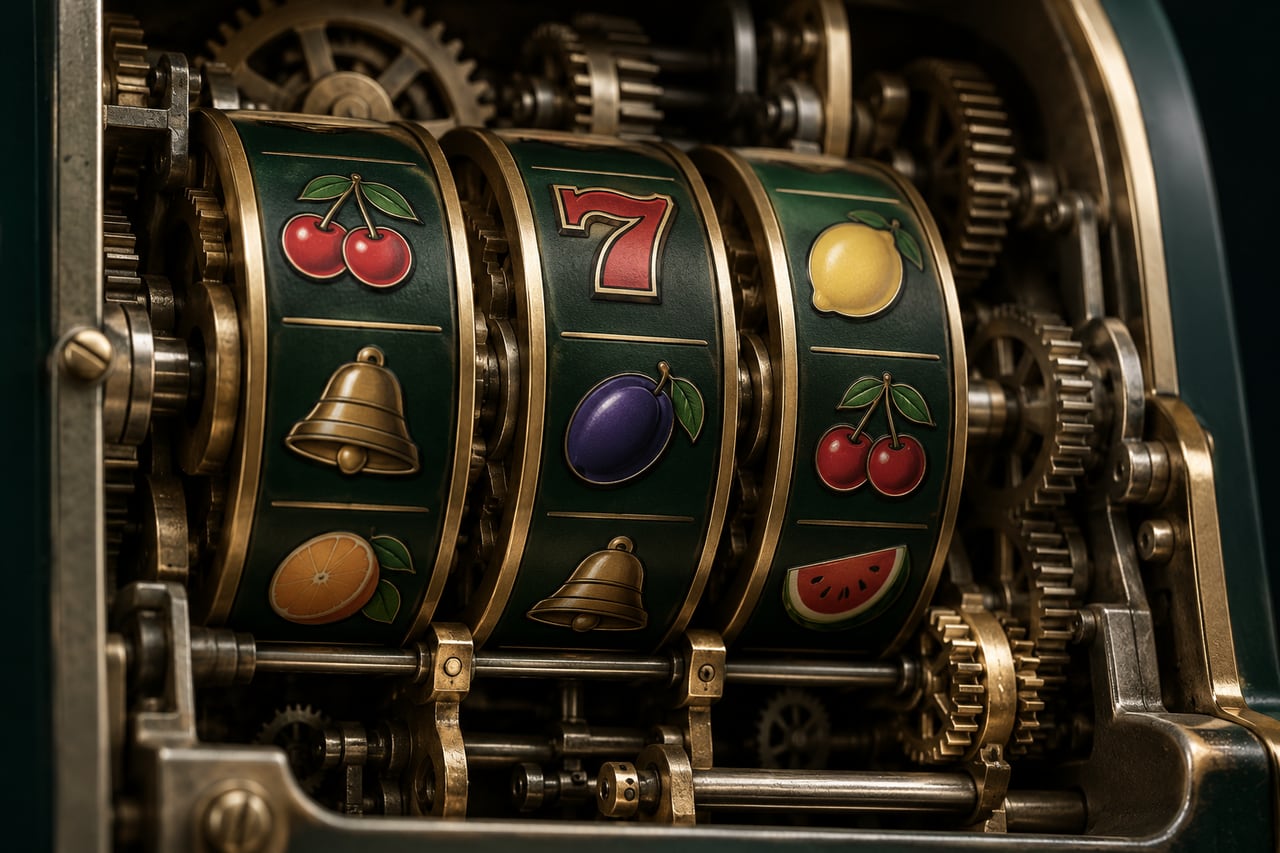
A spin is a game result, not a timing challenge
A random online slot uses a random number generator and game rules to determine an outcome. Reels, sounds and celebrations present that outcome. They do not give you a reliable way to time a winning result.
Regulators set requirements for random outcomes in the games they cover; Great Britain’s random-outcome standard is one example. A familiar-looking slot at an unverified operator is not proof that any such requirements apply to it.
Read the pay table before the first spin
Find the total stake and how prizes are calculated. Some games use paylines, others ways or clusters. A displayed line bet may be only one part of the total spin cost. Check whether an optional feature changes the stake or the published return.
Look up what wild and scatter symbols do in that game. The same label can behave differently across titles. A screenshot of several matching symbols is not enough to calculate a prize without the pay rules.
Separate a return from a profit
If a $1 spin returns $0.40, the balance has fallen by $0.60 even if the interface celebrates the result. A $2 return on a $1 spin is a $1 net gain for that spin. Neither result tells you what the next spin will do.
For a session, use the account history to add all stakes and returns. Remembering a handful of wins can give a misleading impression of the total result.
For a fictional three-spin record at $1 per spin:
| Spin | Stake | Total returned | Net result |
|---|---|---|---|
| 1 | $1 | $0 | −$1 |
| 2 | $1 | $0.40 | −$0.60 |
| 3 | $1 | $2 | +$1 |
| Total | $3 | $2.40 | −$0.60 |
Two spins returned something, but the sequence still lost money. This is a balance calculation, not an illustration of how frequently real slots pay. Use the complete session record rather than a count of “winning” animations.
Understand RTP and volatility together
RTP describes a long-run average; volatility concerns the spread of possible results. Neither is a personal payout schedule. A game with a higher stated RTP can still use up a short-session balance quickly.
Check the active game’s own information rather than assuming every version has the same configuration. If the rules or total stake are unclear, do not use real money to investigate them.
Decide what ends the session
Set a money ceiling and an end time before opening the game. Do not raise either because a feature seems “close” or a game has not paid recently. Our slot myths guide explains why those impressions can be misleading.
A demo can help you learn the interface, but it cannot predict your paid results. See demo versus real-money games for the limits of practice play.