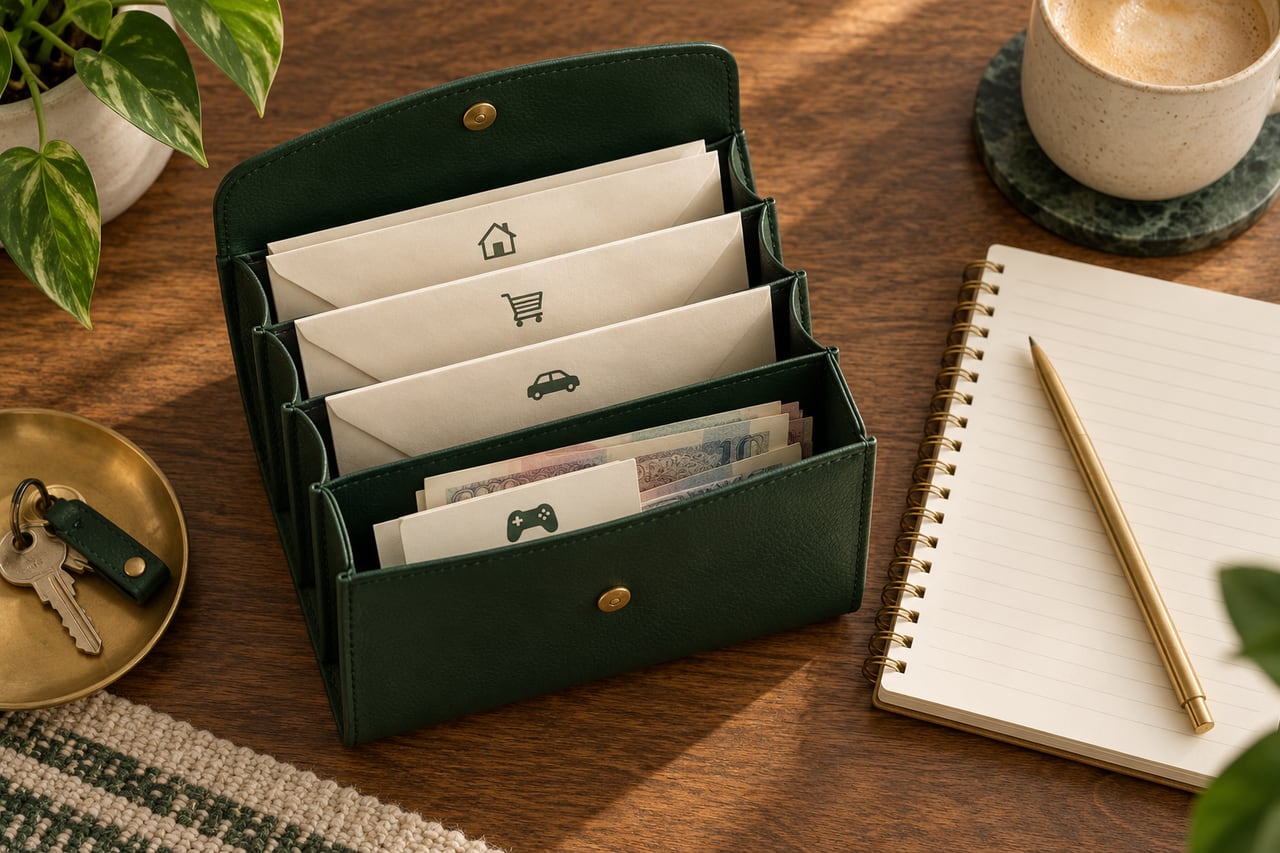
Treat the bankroll as an expense you can lose
In gambling, a bankroll is an amount set aside for play. It is not investment capital, an emergency fund or money expected to pay future bills. “Management” means keeping exposure within a pre-decided boundary; it does not turn a losing game into an income source.
Start after essential spending and commitments. If you need the money back, it is not available for gambling. Do not include credit, borrowed money or hoped-for winnings in the calculation.
Separate deposits, turnover and losses
These three measures answer different questions:
| Measure | What it records |
|---|---|
| Deposits | Money transferred into the account |
| Turnover | The sum of stakes, including reused returns |
| Net result | Money won or lost over the period, accounting for remaining funds |
For a fictional closed session, a $20 starting amount followed by a $12 withdrawal and no remaining balance is an $8 loss. The turnover could have been much larger than $20. A transaction statement is more reliable than remembering the biggest win.
Reconcile an account across more than one session
For a cash-only example with no bonuses, adjustments or unsettled bets, start with $10 already in the account. Add $30 in deposits, subtract $15 withdrawn, and finish with $18 remaining. The net result is $18 + $15 − $10 − $30 = −$7.
That is a $7 loss across the period, even though deposits totalled $30. Use the same beginning and ending times for every figure. Include each account when reviewing your total spending, and investigate unexplained adjustments separately rather than calling them gambling wins or losses.
Why a fixed stake percentage is not a guarantee
A rule such as “bet 1%” says nothing by itself about game volatility, extra wagers or the length of a session. It cannot guarantee that a bankroll will last for a particular number of plays. Increasing the number of wagers also increases total exposure.
Choose a ceiling and an end time before play. Avoid automatic replenishment after a losing session. Our small-budget session checklist turns that into a simple practical plan.
Review what actually happened
Record the date, deposits, withdrawals, remaining balance and time spent. Look across accounts instead of treating each one as a new budget. A limit that repeatedly needs revision during play is not functioning as a boundary.
Use the operator’s deposit-limit tools to add friction, but do not rely on them as proof that gambling is safe. If you are hiding spending, borrowing or trying to recover losses, stop the budgeting exercise and seek independent support. The public-health guidance in the sources below can help you notice when gambling is affecting daily life.